Beyond the Campaign: Why Disability Must Be Part of Every Brand
Disability representation should not be limited to awareness campaigns or special events. It must be a consistent part of an organization’s identity and values. This includes hiring, promoting, and involving persons with disabilities in all aspects of the business, ensuring that their voices and experiences are heard and valued.
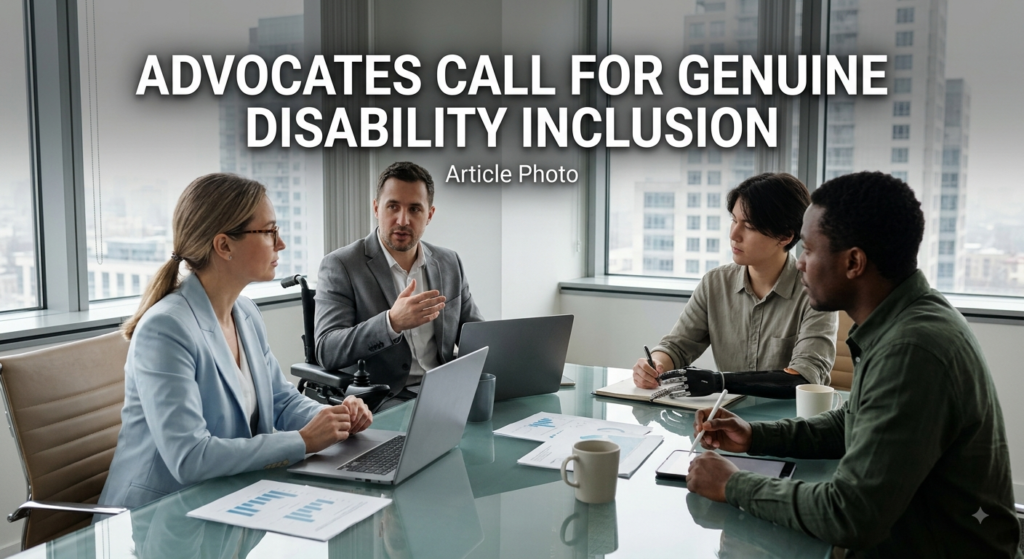

A growing number of organizations are embracing diversity in their advertising, public messaging and corporate identity. Campaigns now regularly feature people of different races, cultures, ages and backgrounds, often accompanied by powerful language about equality, belonging and opportunity.
Yet one group is still too often missing from the picture: persons with disabilities.
The absence raises an important question about what inclusion truly means. For many organizations, disability representation appears mainly during awareness days, special events or diversity-themed campaigns. A wheelchair user may be placed in an advertisement, or a disability-related message may be posted online, while persons with disabilities remain excluded from the organization’s workforce, leadership, product design and decision-making spaces.
Advocates say this approach reduces disability to a branding tool rather than recognizing persons with disabilities as equal participants in society.
A brand is more than a logo, slogan or product. It communicates who an organization values, who it understands and who it believes belongs in its world. When people with disabilities are absent from everyday communication, services and employment opportunities, the message is clear—even when the organization claims to support inclusion.
“Disability should not be used as decoration,” advocates argue.
Featuring a person with a disability only because a campaign is focused on diversity can create the appearance of inclusion without delivering meaningful change. True inclusion requires organizations to move beyond carefully selected images and ensure that persons with disabilities are present throughout the institution.
This includes hiring persons with disabilities, promoting them into leadership positions, involving them in planning and decision-making, and ensuring that workplaces, products, services and customer experiences are accessible.
It also means inviting persons with disabilities to help create the stories being told about them.
For too long, disability narratives have often been shaped by people without disabilities. As a result, campaigns may unintentionally rely on stereotypes, pity or inspirational messaging that does not reflect the everyday realities, skills and contributions of disabled people.
Meaningful representation begins when persons with disabilities have the power to shape the message. They should be involved as writers, designers, photographers, consultants, employees, managers, customers and decision-makers—not simply as faces in promotional materials.
A truly inclusive organization does not ask, “How can we make ourselves look inclusive?” Instead, it asks, “How can inclusion become part of who we are?”
That shift matters because representation carries influence. When persons with disabilities are visibly included in public campaigns, workplaces, leadership teams and consumer experiences, it challenges long-standing assumptions about who can contribute, lead, create and succeed.
However, visibility alone is not enough.
A person with a disability may appear in an advertisement, but if the organization’s website cannot be accessed by screen-reader users, its buildings exclude wheelchair users, its recruitment process is not inclusive, or its leadership has no disabled voices, then the campaign becomes little more than an image.
Inclusion must be reflected in practice.
Organizations that are serious about disability inclusion should review whether their offices are accessible, whether their communication materials can be understood by diverse audiences, whether their digital platforms work for persons using assistive technology, and whether disabled employees have equitable opportunities to advance.
They should also ask whether persons with disabilities are represented in the rooms where major decisions are made.
The next time a brand celebrates diversity, the public should look beyond the photographs and slogans. Important questions remain:
– Who is visible?
– Who is missing?
– Who is shaping the story?
– Who has the power to make decisions?
– And does inclusion exist beyond the campaign?
The answers will reveal whether disability inclusion is a temporary marketing strategy or a lasting organizational commitment.
Persons with disabilities do not need to be included only when an organization wants applause for appearing diverse. They deserve full participation in employment, leadership, design, communication, services and public life.
Inclusion should not be an occasional campaign.
It should be the brand.