Financial Hardship Forces Teenage Student Out of School for a Year
By: Ericson Sayee
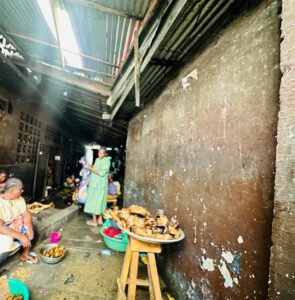
MONROVIA — For 16-year-old Blessing Chea, education has always offered hope of a brighter future. But her family’s financial difficulties have kept her out of school for an entire year.
Blessing said she accumulated more than L$30,000 in unpaid fees at her previous school in Paynesville.
With her family unable to clear the arrears or afford tuition, she had no choice but to stay home.
She had passed her ninth-grade examinations and qualified for the tenth grade. After missing a full academic year, she now plans to resume her education in the tenth grade.
Returning to school will also mean leaving her current community. Blessing explained that a family friend has promised to accommodate and support her because the school is far from where she currently lives.
She plans to live in Omega while attending school in Careysburg.
Despite the setback, Blessing remains determined to continue her education and work toward her goals.
Broader Educational Challenges
Across Liberia, women and girls continue to face barriers to education, skills training and sustainable livelihoods.
Survivors of gender-based violence, adolescent mothers and women and girls with disabilities face additional difficulties in accessing these opportunities.
One effort to address these challenges is the Second Chance Education program under Spotlight Initiative 2.0.
In an August 4, 2026, announcement, UN Women reported that stakeholders had validated a training module combining literacy, life skills, vocational training, entrepreneurship, leadership, protection, and sexual and reproductive health and rights.
The European Union funds the initiative, which is implemented through the Government of Liberia and UN Women in partnership with the HOPE (Helping Our People Excel) Consortium and Youth Crime Watch of Liberia. The module is intended to help women and girls with limited formal education gain practical skills and improve their livelihoods.
In a separate effort, the Office of the First Lady is supporting programs focused on girls’ education and health.
Melchizedek S.P. Dologbay, assistant director for media and photography in the Office of the First Lady at the Ministry of State for Presidential Affairs, said an initiative called “Hope for the Future” aims to expand reproductive health clubs to 50 schools.
According to Dologbay, the project receives funding from the Organization of African First Ladies for Development (OAFLAD), whose members include Liberia’s First Lady.
He said the initiative initially focuses on Grand Bassa, Montserrado, Nimba, Margibi and Bomi counties, providing girls with information on reproductive health, mental well-being, substance abuse prevention and addiction.
Education partners help lead sessions on gender and health, he explained. The long-term goal is to strengthen the partnership with OAFLAD and extend the program to all counties.
Scholarships and School Retention
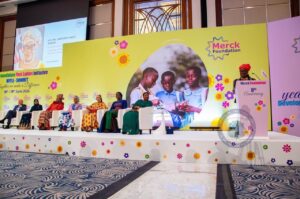
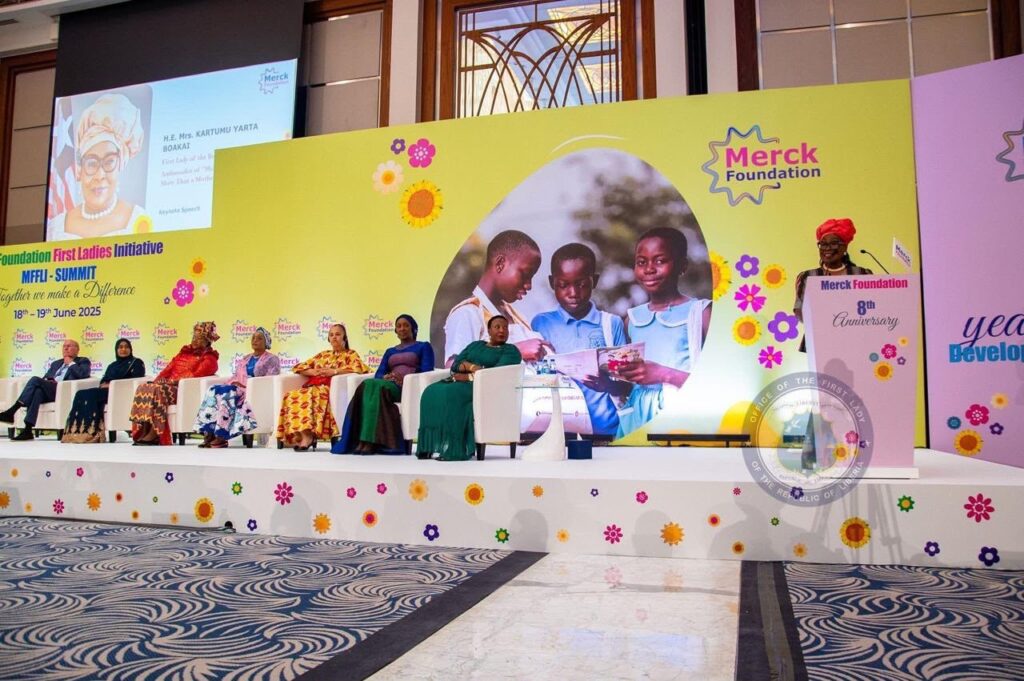
Dologbay also highlighted the First Lady’s Office’s partnership with the Merck Foundation through its “Educating Linda” program, which provides scholarships to academically strong girls from families facing financial hardship.
He said the program began with 20 scholarships for students attending private, public and faith-based schools before expanding to 40 beneficiaries.
According to Dologbay, the KYB Foundation for Humanity has submitted report cards, transcripts and biographical information for graduating twelfth-grade students to the Merck Foundation as part of arrangements for support in the coming academic year.
He said the First Lady’s Office monitors beneficiaries’ progress through regular assessment meetings at the foundation’s office.
At the end of each school year, report cards and supporting school documents are submitted for review.
Students must maintain an average of at least 85 to retain their scholarships, he said. Those who fall below that requirement lose their eligibility for continued support.
Dologbay said the scholarships have eased pressure on families struggling to keep their children in school and allowed beneficiaries to concentrate on their studies.
He also pointed to opportunities for the girls to develop leadership and public speaking skills.
Gaps in Girls’ Education
Historical school data illustrate some of the challenges facing girls in Liberia.
The government’s September 2024 Beijing+30 National Review Report, citing the 2019/2020 Annual School Census, reported that girls accounted for 49.5 percent of total enrollment.
It also noted that 69.9 percent of girls enrolled in school were older than the intended age for their grade.
The report identified school fees, long distances, pressure to contribute to household income, sexual abuse and early pregnancy among the barriers affecting girls’ enrollment and retention.
A Global Challenge
The barriers facing Liberian girls are also reflected elsewhere. UNICEF’s education data page puts the number of girls out of school worldwide at approximately 122 million.
The agency identifies poverty, child marriage and gender-based violence as major obstacles to girls’ education.
In some families facing financial hardship, boys receive priority when money is available for schooling.
UNICEF also reports that girls in countries affected by conflict are more than twice as likely to be out of school as girls in countries unaffected by conflict.
For Blessing, returning to the classroom means an opportunity to continue an education interrupted by financial hardship. With a family friend offering support, she hopes to move forward after a year at home.
highlighting the struggles girls go through to acquire an education, while seamlessly weaving in the advocacy of the Merck Foundation (specifically their initiatives supporting girls’ education and empowering women).