Women Aspirants Begin Early Preparation for Liberia’s 2029 Elections
With women currently holding only 11 of 103 legislative seats in Liberia, a coalition of international and local groups has launched a candidate preparedness training for aspiring female politicians. The program provides practical campaign and leadership training to 41 participants as part of a larger effort to support 240 women across all 15 counties by 2029.
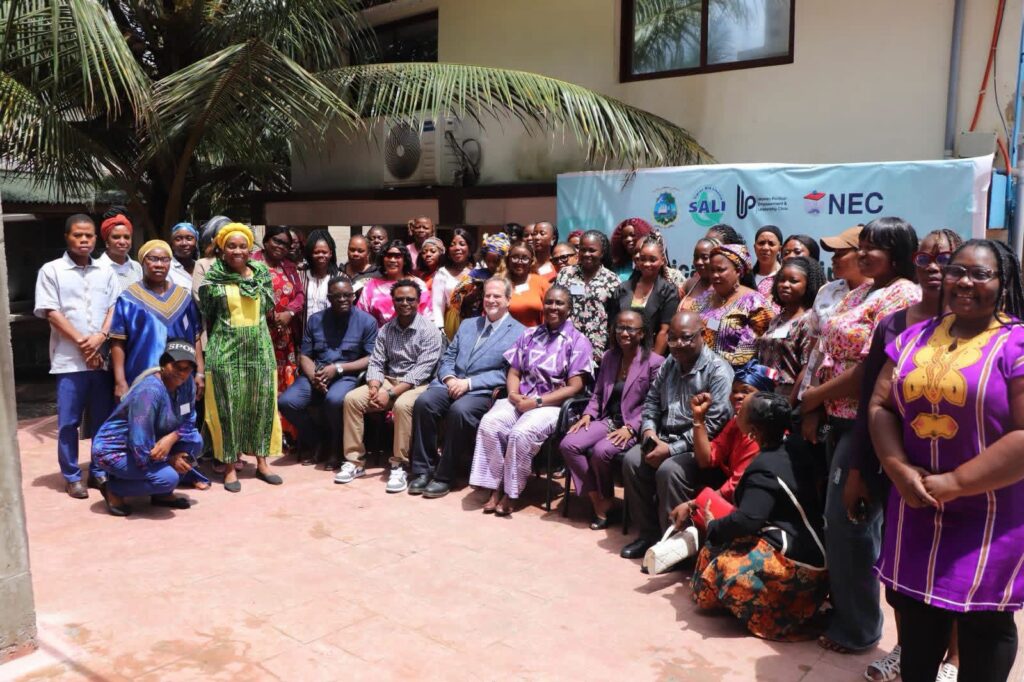
MONROVIA, Liberia — Forty-one women with political ambitions have begun a leadership training programme aimed at preparing them to contest future elections and take on greater roles in Liberia’s governance.
The first group of participants, drawn from Montserrado, Margibi and Grand Bassa counties, assembled in Monrovia on August 19 for a three-day Political Leadership and Candidate Preparedness Training.
The programme is part of a nationwide effort expected to support about 240 women aspirants in all 15 counties ahead of the 2029 general elections.
The initiative is being carried out under the Liberia Electoral Support Project (LESP) by the United Nations Development Programme, in partnership with UN Women and Sister Aid Liberia. The wider LESP programme is managed by UNDP and implemented with UN Women and the Netherlands Institute for Multiparty Democracy, with financial support from the European Union, Ireland and Sweden.
Women remain significantly underrepresented in Liberia’s national politics. Of the 103 seats in the National Legislature, women currently hold only 11.
Organizers say the training is intended to help reduce that gap by giving aspiring women politicians practical knowledge, confidence and networks needed to compete successfully in elections.
The programme goes beyond classroom learning. It is designed to help women develop into leaders who can represent their communities, influence public policy and promote more inclusive decision-making across the country.
Speaking at the opening session, UN Women Liberia Deputy Country Representative Dr. Yemi Falayajo said women’s participation in politics should be viewed as both a matter of rights and an important condition for national progress.
“The country will not move forward as it should without the effective participation of women in decision-making,” Dr. Falayajo told participants. “Men and women bring different perspectives, and all those perspectives are needed in governance and leadership.”
UNDP Electoral Adviser Robert Irish said women who are considering political leadership must also recognize the influence they already have in Liberia’s electoral system.
Referring to findings from the 2023 general elections, Irish said women formed a strong part of the voting population.
“More women voted than men during the last election,” he said, noting that women voters have the power to shape political outcomes when they are organized and fully involved in the democratic process.
The training comes after studies and consultations conducted through the Liberia Electoral Support Project found that many women interested in seeking office lacked access to mentorship, campaign knowledge, political networks and other forms of support.
Women aspiring to contest elections also continue to face major challenges, including limited campaign funding, intimidation, low public visibility, poor access to information and barriers within political structures.
The training uses UN Women’s Political Leadership and Candidate Training methodology, which combines leadership lessons with practical political preparation.
During the three-day session, participants are expected to receive guidance in several key areas, including:
– Transformative leadership and public service.
– Understanding constituencies and voter needs.
– Engaging political parties and building alliances.
– Public speaking and political communication.
– Campaign messaging and voter outreach.
– Fundraising and resource mobilization.
– Campaign budgeting and planning.
– Team building and volunteer coordination.
– Preventing violence against women in elections and politics.
For many of the women attending, the programme offers a chance to turn their political goals into clear and realistic plans.
Daintowon Domah Pay-Bayee, who hopes to contest the District #13 seat in Montserrado County, said she is particularly interested in learning more about fundraising and resource mobilization.
“I want to learn how to identify both human and financial resources because our political process requires significant investment,” Pay-Bayee said.
The candidate preparedness training is part of a larger strategy under the Liberia Electoral Support Project to increase women’s involvement in politics before the next elections.
Other activities under the programme include mapping women aspirants across the country, holding a national networking forum and organizing consultations to identify the key needs of women interested in political leadership.
Those consultations highlighted leadership development, communication, fundraising, mentorship and political networking as major areas requiring support.
By expanding the training to every county, organizers hope to create stronger networks among women leaders and establish mentorship systems that will remain useful long after the 2029 elections.
The initiative is expected to help build a new generation of women leaders who are better prepared to campaign, win public trust and participate fully in shaping Liberia’s democratic future.