Rasak Adekoya Turns Personal Adversity Into a Fight for Disability Inclusion Across Africa
Rasak Adekoya’s journey from a promising broadcasting career to a leading advocate for disability inclusion highlights the challenges faced by individuals with disabilities in Nigeria. His personal experiences of rejection and the lack of accessible facilities fueled his determination to educate others and advocate for legal reform.
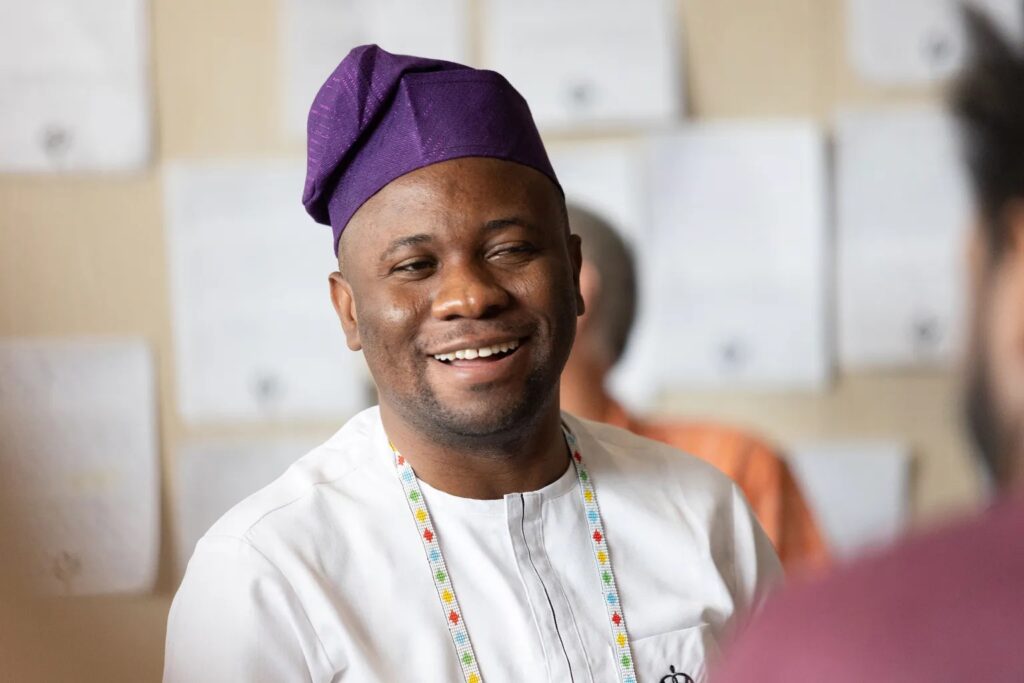
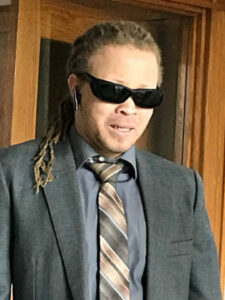
LAGOS, Nigeria — At just 17, Rasak Adekoya was already carving out a promising career in Nigerian broadcasting. He presented live programs, reviewed newspapers alongside experienced journalists, and gained firsthand insight into the power of media to shape public opinion.
At the same time, Adekoya was pursuing a degree in accountancy, determined to build a future that blended business knowledge with journalism. But as he approached graduation, he began losing his sight—an experience that would dramatically alter the course of his life and eventually position him as one of Africa’s leading advocates for disability inclusion.
“Probably, if the health system was better, I would have kept my vision. But so be it. It happened,” Adekoya recalled.
His loss of vision was followed by a series of painful rejections. His university declined to graduate him, telling him it lacked the capacity to support a blind person training as an accountant. Media institutions that had previously welcomed him also said they could not accommodate him because they lacked accessible facilities.
“Sorry. We don’t have what it takes to make a blind person become an accountant,” he remembered being told.
When he approached broadcasting organizations where he had once worked, he received a similar message: “We know you, but we don’t have the facilities to support you.”
At the time, Nigeria had no enforceable disability rights law to protect people facing discrimination in education, employment, and public life. Faced with shrinking opportunities, Adekoya withdrew from society and began writing. That period produced his first book, Brand Your Blindness, in which he expressed the despair of confronting exclusion and rejection.
“I knocked on doors and no one opened, I struck at walls and I couldn’t break through,” he wrote. “My most beautiful idea reeked of an archaic perfume and I, even I, was thrown off the demand shelf!”
But Adekoya’s isolation did not define his future.
After spending a year in rehabilitation and learning to navigate life without sight, he returned to university, restarted from the first year, and eventually completed his studies. He also joined disability-rights advocates campaigning for legal reform in Nigeria.
Their advocacy contributed to the passage of Nigeria’s Discrimination Against Persons with Disabilities (Prohibition) Act, which was signed into law in 2019 and prohibits discrimination against persons with disabilities.
Adekoya later became involved in initiatives aimed at making Nigeria’s elections more accessible. His work included helping to draft inclusive electoral policy, advocating for braille ballot templates for blind voters, and promoting more accessible polling environments for voters with disabilities.
His leadership earned him selection as a Ford Global Fellow, placing him among a global network of leaders working to confront inequality. Through the fellowship, Adekoya has continued to examine how systems, partnerships, and broad coalitions can challenge exclusion at a deeper level.
“Impairment will always happen,” Adekoya said. “One could be born with it, or acquire it later in life. But it is impairment plus barriers that equals disability.”
For Adekoya, those barriers include inaccessible technologies, discriminatory policies, exclusionary institutions, and negative attitudes toward people with disabilities. He believes the most damaging obstacle is the assumption that disability means inability.
He has increasingly focused his advocacy on economic inclusion, arguing that employment, entrepreneurship, and financial independence are essential to dignity and full participation in society—particularly in countries where social protection systems remain weak.
“There’s a mindset that once you have a disability, you’re not credit-worthy. It’s a myth,” he said. “We need to dismantle those myths.”
In response, Adekoya began working directly with private-sector employers. After surveying companies, he found that many were not deliberately refusing to hire persons with disabilities but lacked the knowledge, systems, and confidence to make their workplaces inclusive.
He helped organizations build what he describes as “disability confidence” by auditing workplaces, training employees, and supporting companies to integrate disability inclusion into recruitment, workplace policies, and business practices.
Adekoya also incubated Nigeria’s National Business and Disability Network, creating a platform through which employers could share practical approaches to inclusive hiring and workplace accessibility. The model was later replicated in several African countries.
One of the network’s notable examples involved MTN Nigeria, the country’s largest telecommunications company. Under Adekoya’s guidance, the proportion of employees with disabilities reportedly rose from about 0.2 percent of the workforce to approximately 4 percent.
The company’s inclusion efforts also extended beyond recruitment. Disability inclusion became part of procurement processes, enabling entrepreneurs with disabilities to compete for contracts and supply goods and services.
“Every time a young person calls me and says, ‘Today I found a job,’ it gives me hope,” Adekoya said. “It means one family has economic freedom. It means that young person is changing minds by showing that people with disabilities can be productive.”
He added that meaningful employment allows people with disabilities to build independent lives and, if they choose, support families of their own.
Beyond Nigeria, Adekoya has brought his lived experience into international policy discussions through engagements with organizations including the International Labor Organization and the World Trade Organization. He uses personal stories to illustrate the human reality behind disability statistics and policy debates.
He has also advocated for greater access to assistive technology across Africa. Adekoya believes the African Continental Free Trade Area could help promote local manufacturing and regional distribution of assistive devices, making them more affordable and accessible to persons with disabilities.
As he continues his work as a Ford Global Fellow, Adekoya is exploring a broader question: how African philanthropy can work with global partners to dismantle the barriers that continue to exclude millions of persons with disabilities across the continent.
“Impairment will always be here,” he reflected. “What we can change are the barriers to accessibility.”