Purple Economy Gains Attention as New Model Links Disability Inclusion to Growth
By shifting from viewing persons with disabilities as beneficiaries to recognizing them as consumers and contributors, the Purple Economy model aims to unlock a global consumer market valued at nearly $18 trillion.
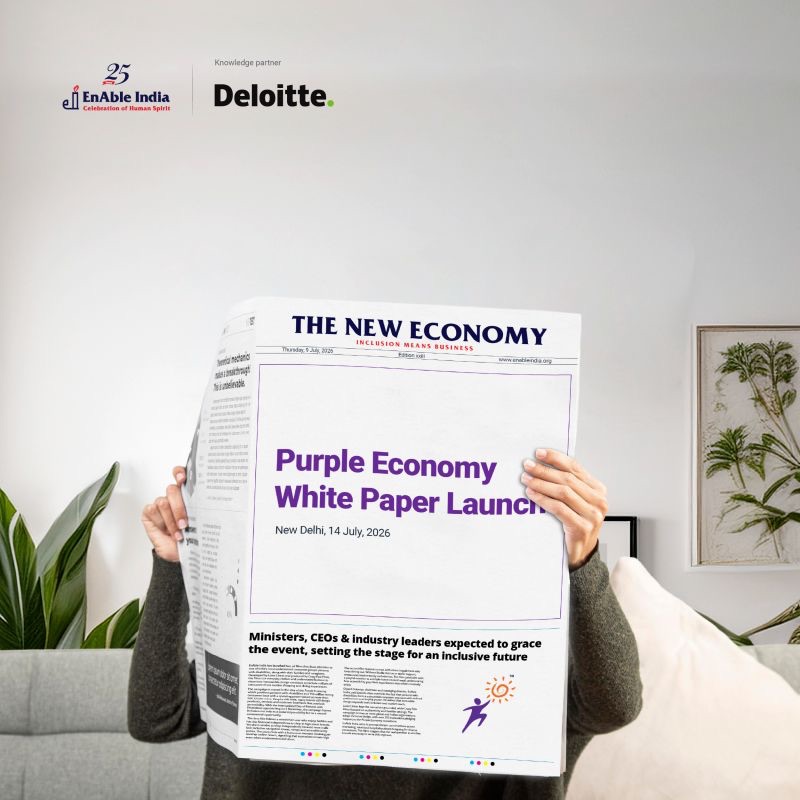
New Delhi, India — A new economic approach known as the Purple Economy is gaining attention for calling on governments, businesses and technology leaders to treat disability inclusion not only as a social responsibility, but also as a major driver of innovation, employment and economic growth.
The model promotes a shift from viewing persons with disabilities mainly as beneficiaries of welfare or charity programmes to recognising them as consumers, employees, entrepreneurs, innovators, taxpayers and contributors to national development.
The idea is supported by the Purple Economy White Paper, developed by EnAble India in collaboration with Deloitte. The report argues that barriers faced by persons with disabilities should be viewed as opportunities to design better services, create new products and build stronger, more accessible markets.
According to the report, persons with disabilities and their households represent a global consumer market estimated at nearly US$18 trillion. The White Paper says this market remains largely underserved in areas such as education, employment, transportation, financial services, tourism, technology, healthcare and public service delivery.
Supporters of the Purple Economy say the framework can help turn legal disability rights into practical opportunities. They argue that the right to education must include accessible schools, learning materials and career pathways, while the right to work must lead to employment, entrepreneurship, skills training and income opportunities.
The framework also highlights the importance of accessible transportation, banking, digital platforms, government services and customer support systems.
Under the proposed model, disability inclusion would move beyond charity, corporate social responsibility and compliance requirements. Instead, it would become part of mainstream economic planning, business development, public policy, technology design and infrastructure investment.
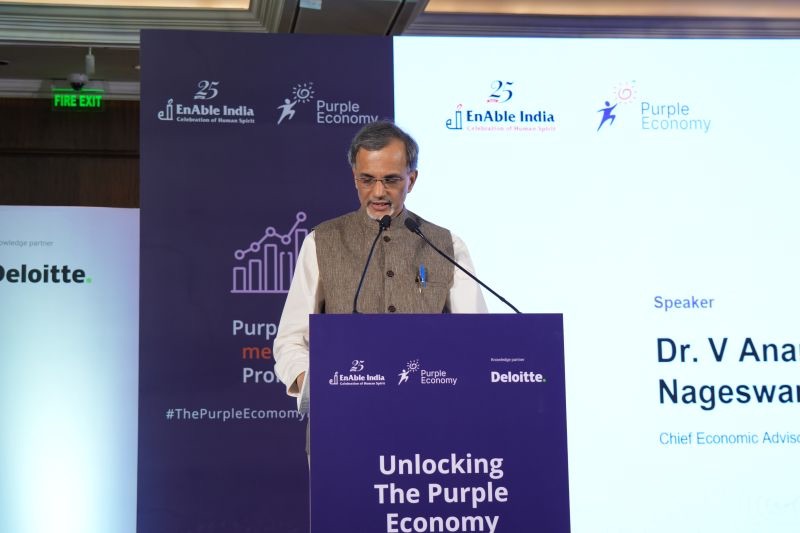
The White Paper recommends a National Growth Framework based on three key areas: demand, supply and discovery. Demand refers to making the needs, skills and buying power of persons with disabilities visible. Supply focuses on developing accessible products, services, enterprises and employment opportunities. Discovery involves using platforms and networks to help people find trusted services and opportunities.
Digital Public Infrastructure is expected to play a central role in the effort. Accessible digital platforms, verified credentials, open networks and service directories can help connect persons with disabilities to schools, employers, financial institutions, government agencies, service providers and business opportunities.
EnAble India’s Open Purple Network, also known as OPuN, is one example of a digital system being developed to support this process. It is designed to help persons with disabilities find training, jobs, loans, assistive technology and other services through a connected and trusted network.
The framework also points to the growing role of artificial intelligence in improving accessibility. AI can support persons with disabilities through voice tools, captions, screen-reading technology, simplified information and personalised digital services. However, the report warns that AI could increase exclusion if people with disabilities are not involved in the design and testing of such systems.
The Purple Economy White Paper further proposes the creation of Purple Economic Zones, where skills development, assistive technology, finance, enterprise support, accessible services and public systems can work together in one location. These zones would serve as practical centres for testing and expanding disability-inclusive economic solutions.
Advocates say the Purple Economy does not force society to choose between profit and social purpose. Instead, it argues that accessible and inclusive systems can help businesses reach new customers, improve services, create jobs and strengthen economies.
The central message is that disability inclusion must be built through policy, technology, public investment, business leadership and the direct participation of persons with disabilities.
As the conversation around accessibility continues to grow, the Purple Economy is presenting a new challenge to governments, investors and businesses: to recognise disability-related barriers not simply as problems, but as signals for opportunity, innovation and shared prosperity.