People With Albinism Demand Equal Opportunity, Not Pity
People with albinism are already proving their capabilities in various fields, from medicine and law to art and science. They are asking for simple things like inclusion in mainstream education and training, which would enable them to compete for the same opportunities as others.
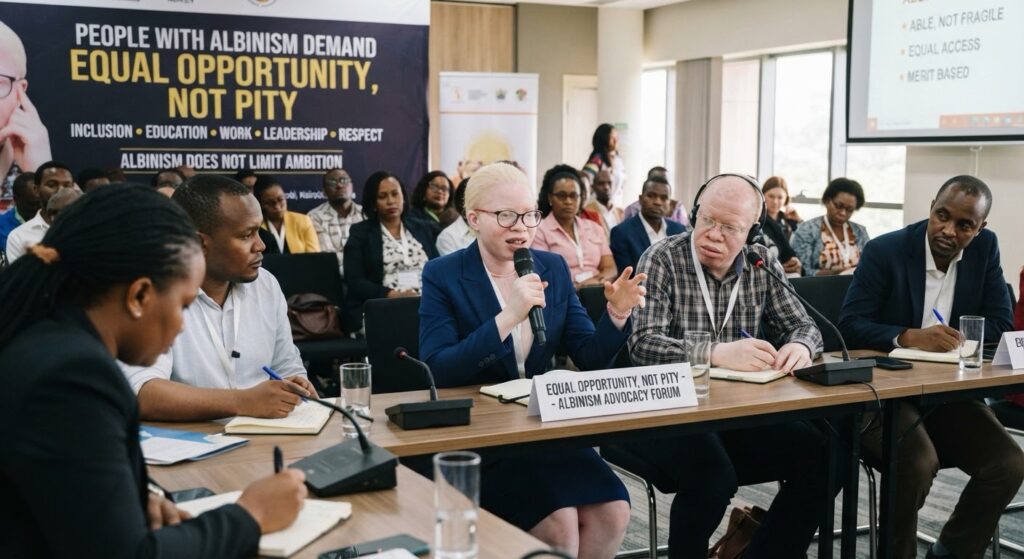
People with albinism are calling for a fundamental shift in how society sees and treats them. Instead of pity and lowered expectations, they are asking for equal access to education, work, leadership and public life.
Albinism is a genetic condition that reduces the amount of melanin in a person’s skin, hair and eyes, often leading to very light colouring and visual impairment. Despite these physical differences, albinism is not a disease and does not limit a person’s intelligence, potential or ability to contribute meaningfully to their community.
Too often, people with albinism are treated as fragile, incapable or dependent, rather than as full human beings with talents and ambitions. Many report that others assume they should aim lower or accept smaller dreams simply because their appearance is different. This discrimination is rooted in ignorance, not in any actual limitation of their abilities.
A person with albinism can pursue any career available to others. They can become doctors, teachers, lawyers, business owners, artists, politicians and farmers. They can also excel as engineers, pastors, scientists, fashion designers, photographers, writers, entrepreneurs and leaders in every sector. In classrooms, workplaces and boardrooms, people with albinism are already proving that they can compete for the same opportunities, build successful careers and shape organizations and communities.
Some people with albinism need reasonable support to participate on an equal basis with others. This may include good lighting in classrooms and offices, visual aids, access to sunscreen, protective clothing or other basic accommodations to protect their skin and support their vision. These measures are a matter of accessibility and fairness, not charity, and they should never be confused with pity.
Advocates stress that decisions about education, employment and leadership should never be made based on skin colour or appearance. When institutions lower standards, block opportunities or quietly exclude people with albinism, they send a damaging message that difference equals incapacity. Instead, they argue, schools, employers and community leaders must judge people with albinism by their character, skills, work ethic and knowledge.
From classrooms to workplaces, people with albinism are asking for very clear and simple things. They want inclusion in mainstream education and training programs, not segregation or dismissal. They need accessible environments where their vision and skin health are respected. They seek equal opportunity in hiring, promotion and leadership selection, with criteria based on merit rather than appearance. Above all, they want others to recognize their abilities before making assumptions about their limitations.
Behind every person with albinism is a human being with dreams, talents and a future to build. Their skin may look different, but their hopes for education, decent work and a chance to lead are the same as anyone else’s. When society chooses to see ability instead of difference, people with albinism can fully share their skills, creativity and leadership with the world.
Advocates are urging families, schools, employers and policymakers to open doors rather than close them. This means offering people with albinism the chance to learn, to work and to advance into leadership roles. It also means listening to their voices as they show, in practical ways, what they are capable of doing. As these voices grow louder, one message is clear: albinism changes appearance, not ambition—and it should never be used to limit anyone’s right to dream and achieve.