Liberia Marks 23 Years Since Accra Peace Deal With Renewed Call for Justice and Reconciliation
Marking the 23rd anniversary of the Accra Comprehensive Peace Agreement, Liberia’s PeaceGen project has kicked off nationwide community dialogues. Bringing together survivors, youth, and government officials, the discussions explore memory, reconciliation, and accountability, highlighting recent legislative steps toward establishing a War and Economic Crimes Court to secure lasting peace.
MONROVIA, Liberia — Liberia has begun commemorating the 23rd anniversary of the Accra Comprehensive Peace Agreement with a series of community dialogues focused on justice, reconciliation and the country’s long-running effort to address the legacy of its civil wars.
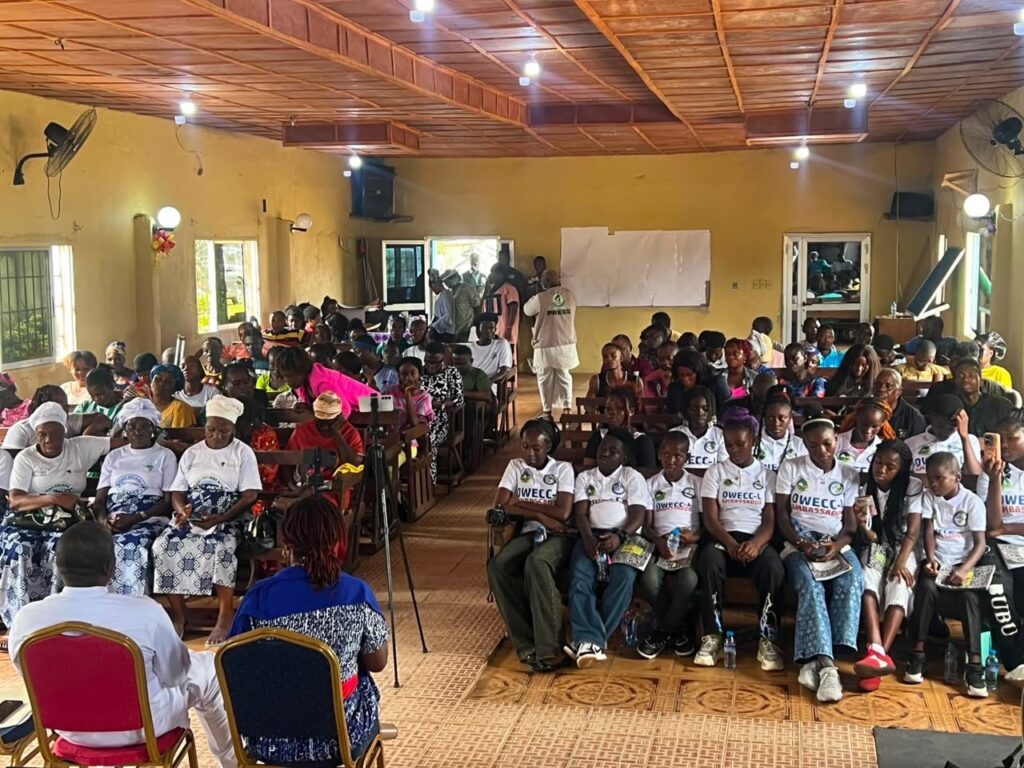
The first discussion brought together survivors of the conflict, women leaders, young people, civil society representatives and government officials. Participants reflected on Liberia’s difficult past and discussed what is still needed to build trust, heal communities and ensure accountability for serious wartime crimes.
The dialogue was organized under the PeaceGen Liberia project, also known as “Generation for Peace.” The initiative is being implemented by the Kvinna till Kvinna Foundation, the Women NGOs Secretariat of Liberia, known as WONGOSOL, and other partner organizations. It is being carried out in collaboration with the Office for the Establishment of the War and Economic Crimes Court for Liberia, or OWECC-L.
Organizers said the meeting was designed as a safe space where people affected by the war could share experiences, listen to others and take part in discussions about Liberia’s future.
Esther S. Davis Yango, speaking on behalf of WONGOSOL, said the session brought together people of different generations and backgrounds to discuss peace, justice and healing.
She said the organizers used survivor-centered and trauma-informed methods to protect participants. People were allowed to leave the discussion whenever they felt uncomfortable, while photographs, recordings and personal testimonies could only be used with the informed consent of those involved.
Remembering the Accra Agreement
Liberia signed the Accra Comprehensive Peace Agreement on August 18, 2003. The agreement involved the Liberian government, the rebel movements Liberians United for Reconciliation and Democracy, known as LURD, and the Movement for Democracy in Liberia, or MODEL, as well as political parties.
The agreement formally ended Liberia’s second civil war and opened the way for a transitional government, disarmament, elections and post-war recovery.
Liberia’s conflict began in December 1989 and continued through several phases. Although a peace process had earlier reduced fighting, violence returned in 1999 and continued until the 2003 agreement.
Cllr. Jallah A. Barbu, Executive Director of OWECC-L, said the civil wars claimed an estimated 250,000 lives and forced hundreds of thousands of Liberians from their homes. He said the country continues to feel the effects of wartime violence, displacement and impunity.
According to Barbu, Liberia’s struggle for peace cannot be separated from its need for justice.
He noted that the Accra agreement did not only end active fighting. It also created a pathway for transitional justice, including the establishment of the Truth and Reconciliation Commission.
Truth, Justice and Accountability
The Truth and Reconciliation Commission operated from 2005 to 2009. It examined human rights abuses and conflict-related crimes committed in Liberia from 1979 onward.
At the end of its work, the commission issued 207 recommendations. These included proposals on truth-telling, reparations for victims, memorials, institutional reforms and accountability for those responsible for serious crimes.
One of its major recommendations was the creation of an Extraordinary Criminal Court to prosecute individuals accused of bearing the greatest responsibility for war crimes and economic crimes.
For many years, that recommendation was not implemented. Human rights groups, survivors and international partners continued to call on Liberia to establish a court that would deal with serious crimes committed during the civil wars.
The issue gained stronger political attention in recent years.
In April 2024, the Liberian Legislature passed a joint resolution supporting the establishment of a War and Economic Crimes Court. President Joseph Nyuma Boakai approved the resolution.
A month later, President Boakai issued Executive Order No. 131, creating OWECC-L to begin preparing the institutional foundation for the court. The office’s mandate was later renewed in 2025 and again in 2026.
In May 2026, President Boakai submitted bills to the Legislature seeking the formal establishment of both a War and Economic Crimes Court and an Anti-Corruption Court.
Barbu said the court should not be viewed as a mechanism for revenge.
Instead, he said, it should help strengthen the rule of law, protect public confidence in state institutions and demonstrate that serious crimes cannot be ignored without consequences.
“Accountability is closely linked to national security,” he told participants, warning that unresolved crimes can weaken trust in government, create frustration in communities and allow grievances to pass from one generation to another.
He called on lawmakers to move with urgency, while also ensuring that the proposed court meets international fair-trial standards.
He further urged the government and its partners to prioritize cases involving those who bear the greatest responsibility for grave crimes and to establish an effective witness-protection system before any trials begin.
Call for Healing Beyond Memory
In the keynote address, Sheikh S. S. Kamara, Executive Director of the Liberia Peacebuilding Office, encouraged Liberians to use the anniversary to think deeply about the country’s past and future.
He asked participants to consider three questions: What should Liberia remember? What has the country reconciled? And what actions must be taken next?
Kamara led attendees in observing a moment of silence for the many people who died during Liberia’s civil wars.
He also paid tribute to the Women in Peacebuilding Network, or WIPNET, whose women-led campaign in Accra in 2003 helped increase pressure on Liberia’s warring parties to reach a peace settlement.
The women’s movement became one of the strongest symbols of Liberia’s peace process. Their actions demonstrated how ordinary citizens, particularly women, could influence national and regional efforts to end war.
Kamara said Liberia has made progress since the end of the conflict, but reconciliation remains incomplete.
He noted that several recommendations of the Truth and Reconciliation Commission have not yet been carried out. He also said many communities, survivors and young people believe they have not fully benefited from the peace that followed the 2003 agreement.
“Memory without reconciliation becomes bitterness,” Kamara said. “Reconciliation without memory can become denial.”
He said Liberia must remember the harm caused by the war while also creating practical opportunities for justice, healing and national unity.
PeaceGen Expands Community Dialogue
The Monrovia event was the first of three planned community dialogue sessions under PeaceGen Liberia’s anniversary activities.
Additional dialogues are expected to take place in Bomi County on August 21 and Bong County on August 25.
PeaceGen Liberia is a three-year initiative running from 2026 to 2029. It is funded by the European Union and co-funded by the Embassy of Ireland.
The project is led by the Kvinna till Kvinna Foundation in partnership with Liberian women-led and youth-led civil society organizations.
It was officially launched in Monrovia on June 23, 2026, following an earlier pre-launch and sub-grant signing ceremony at the WIPNET Peace Hut at Invincible Park. The site is widely associated with Liberia’s women-led peace movement during the civil war.
The programme seeks to strengthen Liberia’s ability to prevent conflict, resolve disputes peacefully and promote inclusive peacebuilding.
Its major areas of work include reconciliation, transitional justice, women’s political participation, youth leadership, community engagement, peace-focused media reporting and intergenerational dialogue.
The project is being implemented in Bomi, Bong, Montserrado, Nimba and Sinoe counties, while national advocacy and coordination activities are being conducted in Monrovia.
Partner organizations include WONGOSOL, the Female Journalists Association of Liberia, the Association of Female Lawyers of Liberia, the Alliance for Peace, Justice and Human Rights, and the National Young Women Political Council of Liberia.
Women, Youth and Media at the Center
Organizers say PeaceGen is intended to ensure that women, young people, survivors and affected communities are not left out of Liberia’s national peace and justice process.
The project places strong attention on youth participation, encouraging young Liberians to become active leaders in peacebuilding rather than only beneficiaries of peace programmes.
Through mentorship, training, intergenerational engagement and grassroots advocacy, young people are expected to contribute to Liberia’s Youth, Peace and Security agenda.
The National Young Women Political Council of Liberia is also expected to support the development of Youth, Peace and Security Ambassadors. These ambassadors will help raise awareness about Liberia’s National Action Plan on Youth, Peace and Security and promote peacebuilding in their communities.
The media component of PeaceGen is equally important. The Female Journalists Association of Liberia is working with journalists and media institutions to improve reporting on peace, reconciliation and transitional justice.
The goal is to promote journalism that is sensitive to gender, youth concerns and conflict dynamics, while reducing misinformation, harmful narratives and language that could create division.
As Liberia marks more than two decades since the Accra Peace Agreement, the message from the dialogue was clear: ending war was only the beginning. Sustaining peace will require justice, inclusion, truth, remembrance and meaningful participation by the people most affected by the country’s violent past.