Where Ability Meets Opportunity: Inside Bestwork Industries for the Blind
Bestwork Industries for the Blind in Cherry Hill, New Jersey, has emerged as a beacon of empowerment, transforming the lives of thousands of blind and visually impaired individuals through innovative employment opportunities. Founded by Jim Varsaci, a New Jersey native who overcame blindness during World War II, Bestwork has grown into the largest employer of its kind in the state, providing a platform for economic independence and pride. With a workforce of over 275 employees, Bestwork produces high-quality military apparel and other goods for the U.S. Navy, Army, and commercial customers, showcasing the potential of skilled workers with visual impairments.
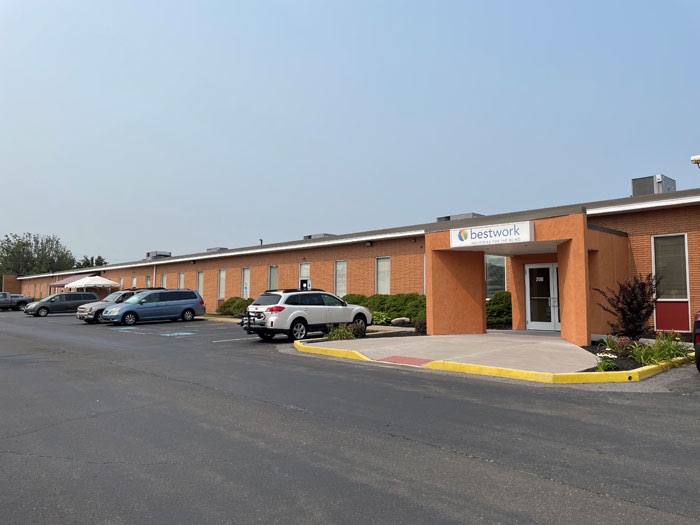
Bestwork Industries for the Blind in Cherry Hill, New Jersey has quietly grown into the state’s largest employer of people who are blind or visually impaired, turning factory floors and office suites into engines of independence, pride and economic opportunity for a community long shut out of the labor market.
Bestwork’s story begins with Jim Varsaci, a New Jersey native who lost his sight while serving in World War II and refused to accept that blindness meant a life on the sidelines.
Seeing how meaningful work restored dignity and confidence for his peers, Varsaci rallied private supporters, the New Jersey Commission for the Blind and Visually Impaired, and National Industries for the Blind to launch Bestwork Industries for the Blind as a private nonprofit on September 14, 1981.
The agency started in a modest 10,000‑square‑foot workshop in Westmont, focused on state contracts, before moving into a far larger Cherry Hill facility that allowed it to nearly double its workforce and broaden its business lines.
From the beginning, Bestwork has targeted a stark reality: roughly 70 percent of people who are blind face unemployment, even when they are capable and eager to work.
Organizers responded by making training, job creation and career development their central mission, deliberately building operations around roles that could be performed by workers who are blind and then investing in the skills and technology to make those jobs accessible.
Today, Bestwork is recognized as the largest employer of blind and visually impaired people in New Jersey, with blind employment growing from just over 50 individuals to around 100 under current leadership, alongside a total workforce of more than 275.
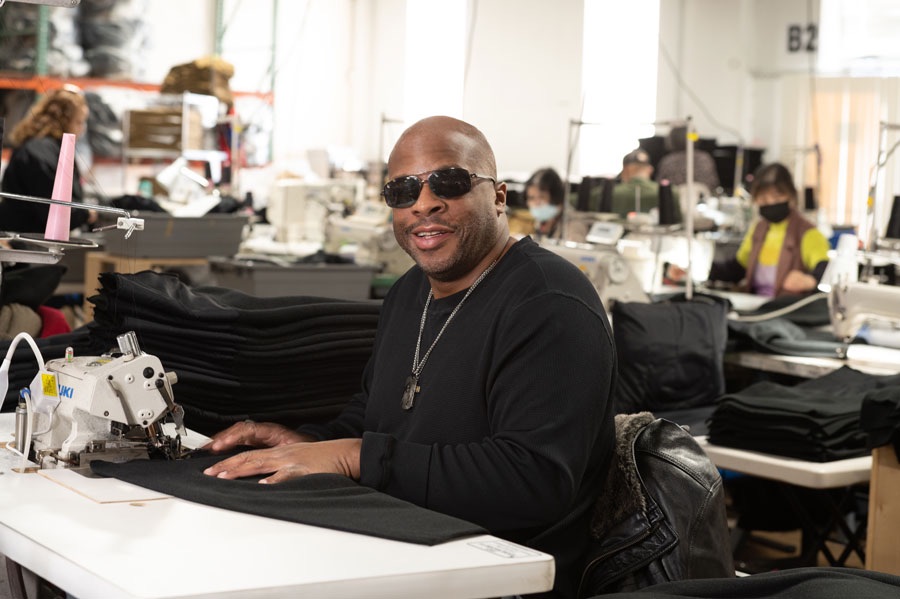
Inside Bestwork’s 50,000‑plus‑square‑foot facility in Cherry Hill, employees produce military apparel and other goods that move directly into the supply chains of the U.S. Navy, Army and commercial customers — work that is both technically demanding and mission‑critical.
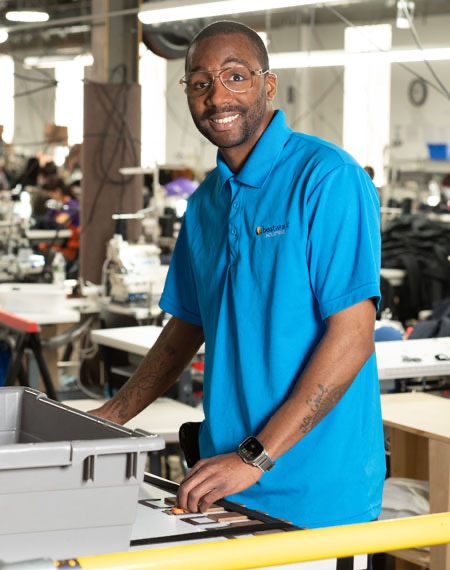
Blind and visually impaired staff cut, sew and inspect items such as Navy fleece parkas, running pants, flight deck jerseys, Army cold‑weather underlayers, and fire‑retardant, moisture‑wicking garments, all under ISO 9001:2015 and other quality certifications.
Beyond sewing, workers also handle kitting, packaging and light assembly, warehousing and distribution, document scanning and digital imaging, and e‑commerce operations, giving blind employees a variety of roles that match different interests and aptitudes.
To make those jobs truly accessible, Bestwork offers paid training to individuals who are blind or visually impaired, teaching everything from textile manufacturing techniques to digital imaging workflows and customer‑service skills.
New hires learn to operate sewing machines, scanners and specialized software in a structured environment that pairs mentoring with cross‑training, so employees can move across production lines and into new business services as their careers advance.
The organization emphasizes that people who are blind are not confined to “blind jobs”; instead, with comprehensive training and adaptive tools, they perform the same high‑expectation tasks as any other workers and build résumés that translate into broader opportunities.
Bestwork’s model is rooted in competitive integrated employment — meaning blind workers earn the same wages as sighted colleagues doing similar work and share the same workplace, rather than being segregated into lower‑paid, sheltered environments.
The agency is certified by New Jersey’s Commission for the Blind and Visually Impaired as a competitive integrated employer, affirming that its jobs meet standards for pay, benefits and inclusion in mainstream work settings.
On the factory floor and in office roles, people who are blind work alongside sighted peers, contributing to production goals, meeting contract deadlines and gaining the professional recognition that comes with being part of a high‑performing team.
Since 2021, President and CEO Jon Katz, a Marine Corps veteran, has pushed Bestwork to evolve from a single‑line manufacturing shop into a multifaceted social enterprise while keeping its job‑creation mission front‑and‑center.
Under Katz, Bestwork expanded from one to four core business lines — textile apparel manufacturing, e‑commerce, document scanning and digital imaging, and kitting/packaging/light assembly — giving blind workers more choices and diversifying revenue.
Revenues have climbed from just over 10 million dollars in 2022 to more than 30 million, with forecasts above 40 million in coming years, and each new contract or service area is framed internally as another opportunity to hire and train people who are blind.
While the Cherry Hill headquarters remains the hub, Bestwork has deliberately pushed its footprint outward so that blind and visually impaired New Jerseyans who live far from the city can access work.
The nonprofit now operates three satellite locations — in Montclair, Roselle and Egg Harbor City — in partnership with local organizations, providing scalable, “portable” jobs that can be replicated in communities beyond daily commuting distance of the main plant.
These sites extend training and employment into North and South Jersey, ensuring that the promise of meaningful work is not confined to a single corner of the state.
Bestwork’s reach also extends online through Bestwork Supply Center, an e‑commerce platform offering more than 40,000 cleaning, janitorial, safety and office products with free shipping — a business that both creates jobs and sustains the mission.
Every purchase from the Supply Center supports Bestwork’s programs for training and employment, effectively turning routine supply orders into investments in blind workers’ economic independence.
Staff who are blind participate in managing orders, inventory and customer service for the online store, gaining experience in modern logistics and digital business operations.
For employees, the impact is personal: paychecks mean rent, childcare and savings, but also the confidence that comes from producing vital goods — including uniforms for the Armed Forces — and meeting high professional standards.
Bestwork leaders describe their work as “shattering preconceived notions” about blindness, showing that with training, accessible technology and competitive integrated employment, visual impairment need not limit ambition or productivity.
In New Jersey and beyond, the Cherry Hill‑based nonprofit has become a living example of disability inclusion in practice, proving that when business goals are aligned with social purpose, factories and offices can double as powerful platforms for justice and opportunity.