King Mswati III commends young innovator who converted a wheelchair into a motorized vehicle
The King’s recognition of Maseko’s work underscores the importance of inclusive development and the role of technology in empowering individuals with disabilities. This exhibit serves as a testament to the transformative potential of innovation in everyday life.
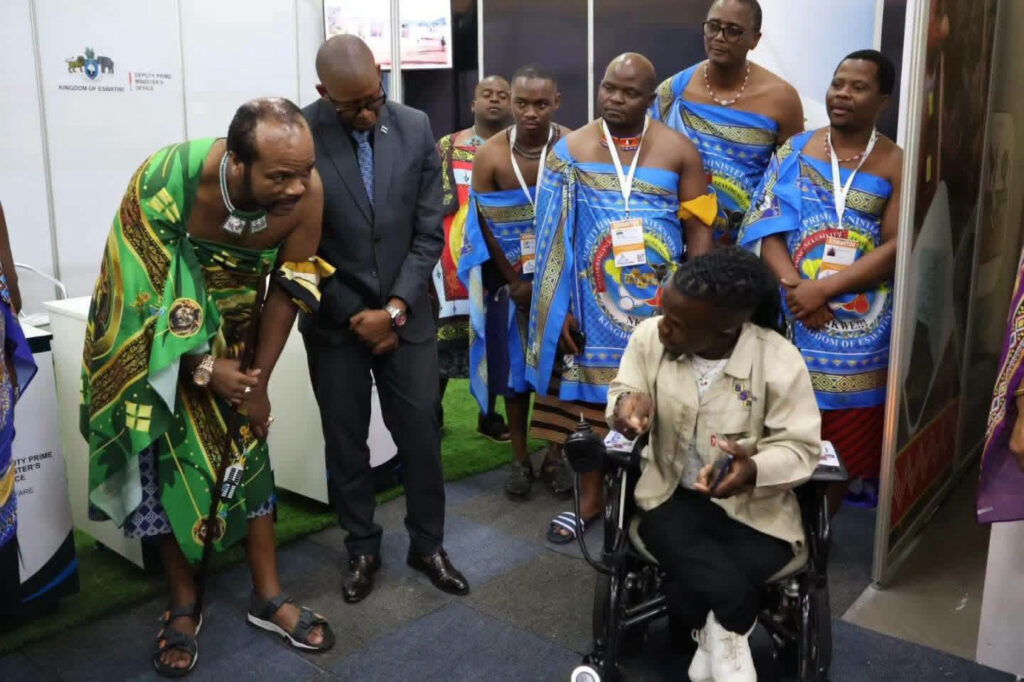
MBABANE, Eswatini — King Mswati III has commended Sifiso Maseko, a young person with a disability, for converting a conventional wheelchair into a functional motorized vehicle, highlighting both personal ingenuity and the wider promise of locally adapted assistive technology.
The invention was displayed during the King’s visit to the Deputy Prime Minister’s stall at Pavilion 2. There, Maseko demonstrated how the adapted wheelchair operates as a compact automobile, complete with illumination, turn indicators, and a horn. The electrical features run on a rechargeable battery.
Officials and visitors who viewed the demonstration saw a practical answer to everyday mobility needs: a familiar wheelchair frame re-engineered for independent travel rather than left as a static aid. The conversion does not replace clinical rehabilitation or formal transport systems, but it shows how modest components can extend range, visibility, and safety for a user who might otherwise depend on others.
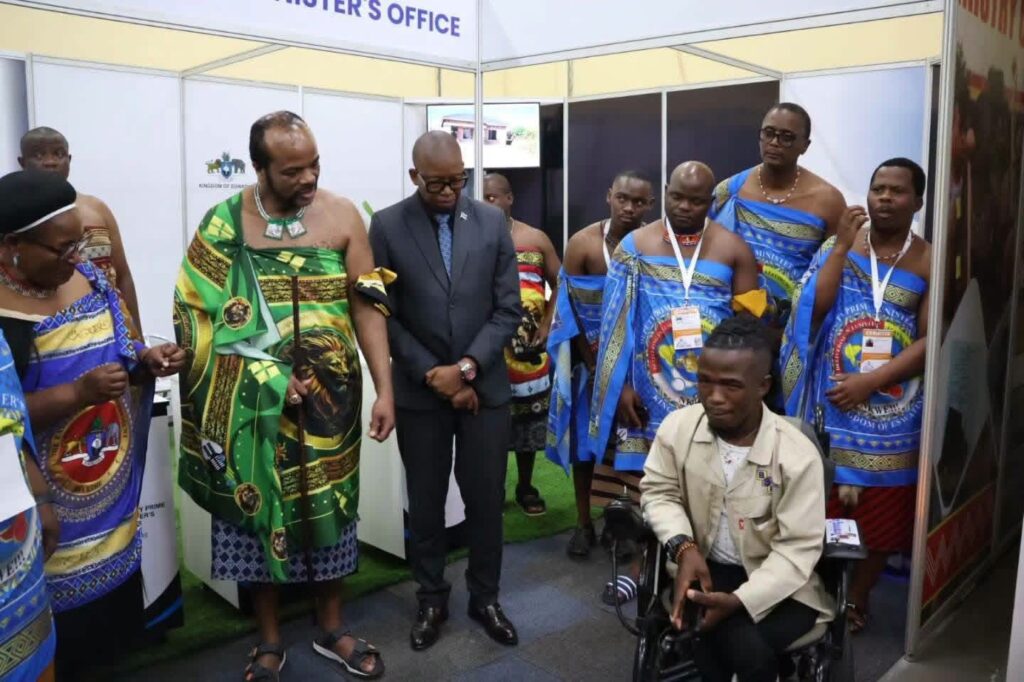
The King’s public recognition of Maseko also framed a broader message about young people with disabilities in Eswatini. Resilience and creativity, the visit suggested, are not abstract virtues; they appear in workshops and stalls when someone rewires lights, fits a horn, and proves that a wheelchair can move through public space with the same signals expected of other road users.
Advocates of inclusive development have long argued that independence grows when technology is adapted to local conditions and to the person who will use it. Maseko’s exhibit illustrated that argument in concrete form: battery power, lighting, and signaling turned a mobility aid into a vehicle that can be seen, heard, and steered.
The display at Pavilion 2 therefore served two purposes. It honoured one young inventor. It also invited the country to treat disability not only as a social concern but as a source of technical problem-solving that can improve daily life.