Global Communities Unite to Observe Blindness Awareness Month: Fostering Inclusion, Accessibility, and Vision Health
Blindness Awareness Month highlights the critical need for systemic accessibility and proactive eye health. Key themes include digital accessibility, inclusive urban infrastructure, and employment opportunities for the visually impaired. Clinics and public health agencies are offering free or low-cost screenings and educational workshops to promote early detection and prevention of vision loss.
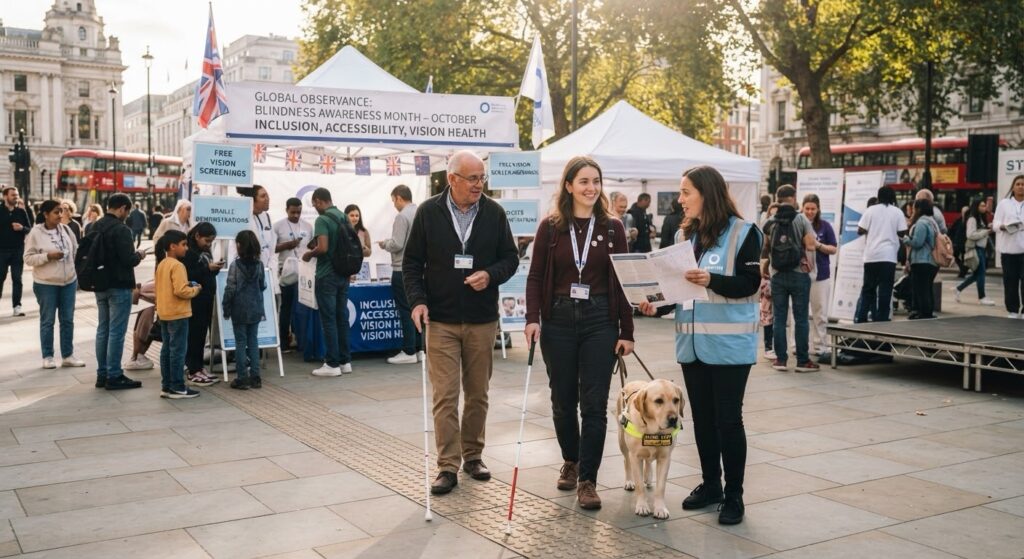
Across the globe, communities, advocacy groups, healthcare institutions, and international organizations are observing Blindness Awareness Month throughout October. This annual global initiative serves as a powerful platform to spotlight the realities faced by individuals who are blind or partially sighted, champion systemic accessibility, and emphasize the critical importance of proactive eye health and preventative care.
From major metropolitan centers to grassroots community groups, October has transformed into a critical period for public education and engagement. International campaigns this year emphasize the removal of physical, digital, and societal barriers that limit full participation for the visually impaired community.
Key themes dominating global advocacy efforts include:
- Digital Accessibility: Urging governments, tech companies, and corporations to ensure websites, applications, and digital services are fully compatible with screen readers and assistive technologies.
- Inclusive Urban Infrastructure: Promoting universal design principles in public transportation, tactile paving on walkways, and audible pedestrian signals to foster independent mobility.
- Employment Opportunities: Challenging lingering misconceptions among employers and highlighting the diverse skills, adaptability, and high potential of blind and low-vision professionals.
Prioritizing Vision Health and Prevention
Beyond advocating for the rights and inclusion of those currently living with vision loss, Blindness Awareness Month places a heavy emphasis on healthcare education. According to global health organizations, a significant percentage of visual impairment is preventable or treatable if detected early.
Throughout the month, clinics and public health agencies are offering:
- Free or Low-Cost Screenings: Providing community access to crucial eye exams to catch conditions such as glaucoma, diabetic retinopathy, and age-related macular degeneration in their early stages.
- Educational Workshops: Informing the public about the impact of chronic lifestyle diseases, such as diabetes, on long-term ocular health.
- Pediatric Eye Care: Encouraging routine vision checks for children to ensure developmental and educational milestones are not hindered by uncorrected refractive errors or undetected eye conditions.
Communities worldwide have embraced the observance through diverse, localized events. Schools are hosting empathy-building workshops and learning basic Braille, libraries are expanding their collections of audiobooks and large-print resources, and sports organizations are hosting demonstration matches of blind sports, such as goalball and blind cricket, to foster community connection.
As Blindness Awareness Month continues to unfold, global leaders and advocacy networks are calling for sustained, year-round action rather than isolated awareness. By fusing community-level empathy with policy-driven structural changes, societies worldwide are taking monumental strides toward a genuinely accessible and inclusive future for people of all visual abilities.